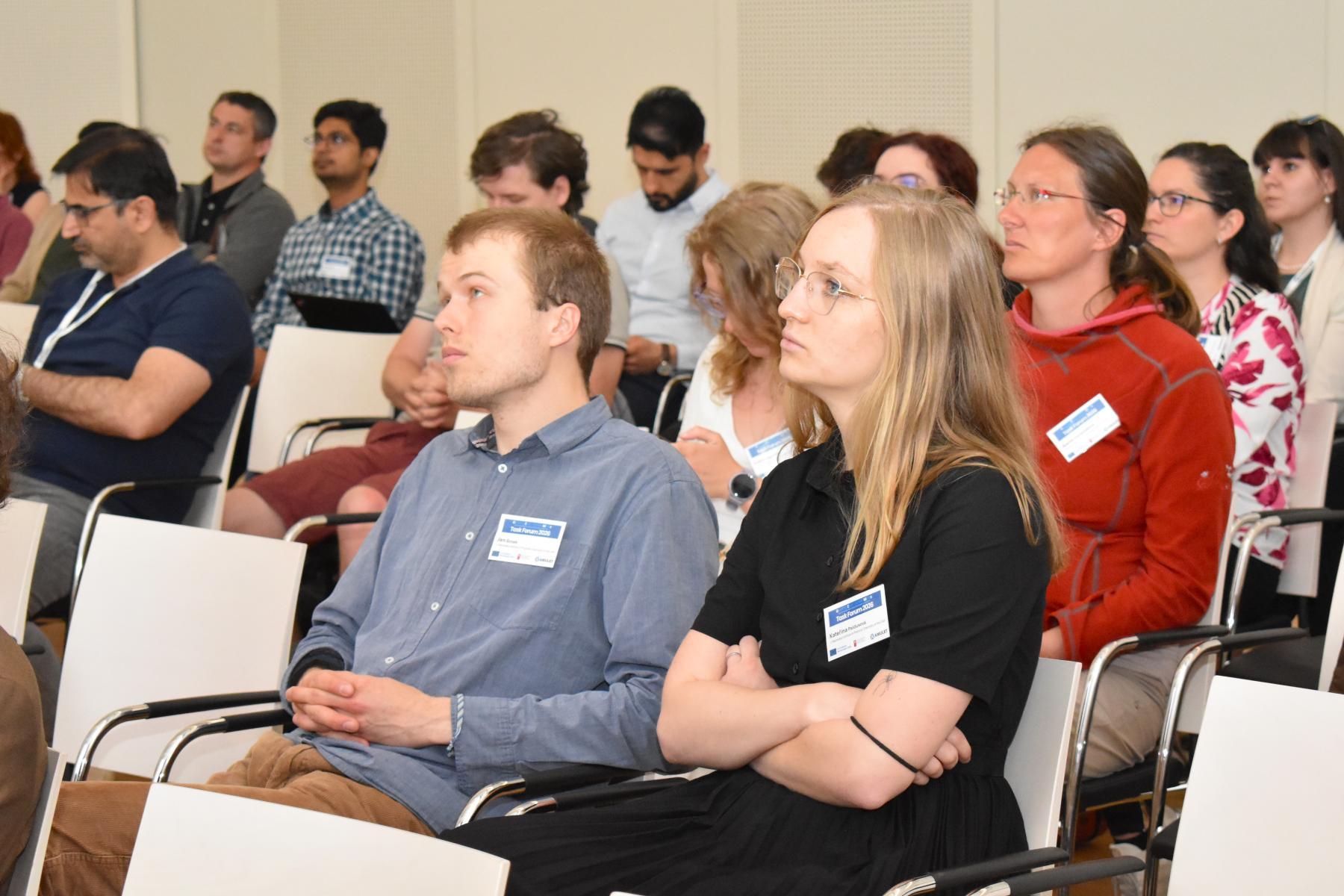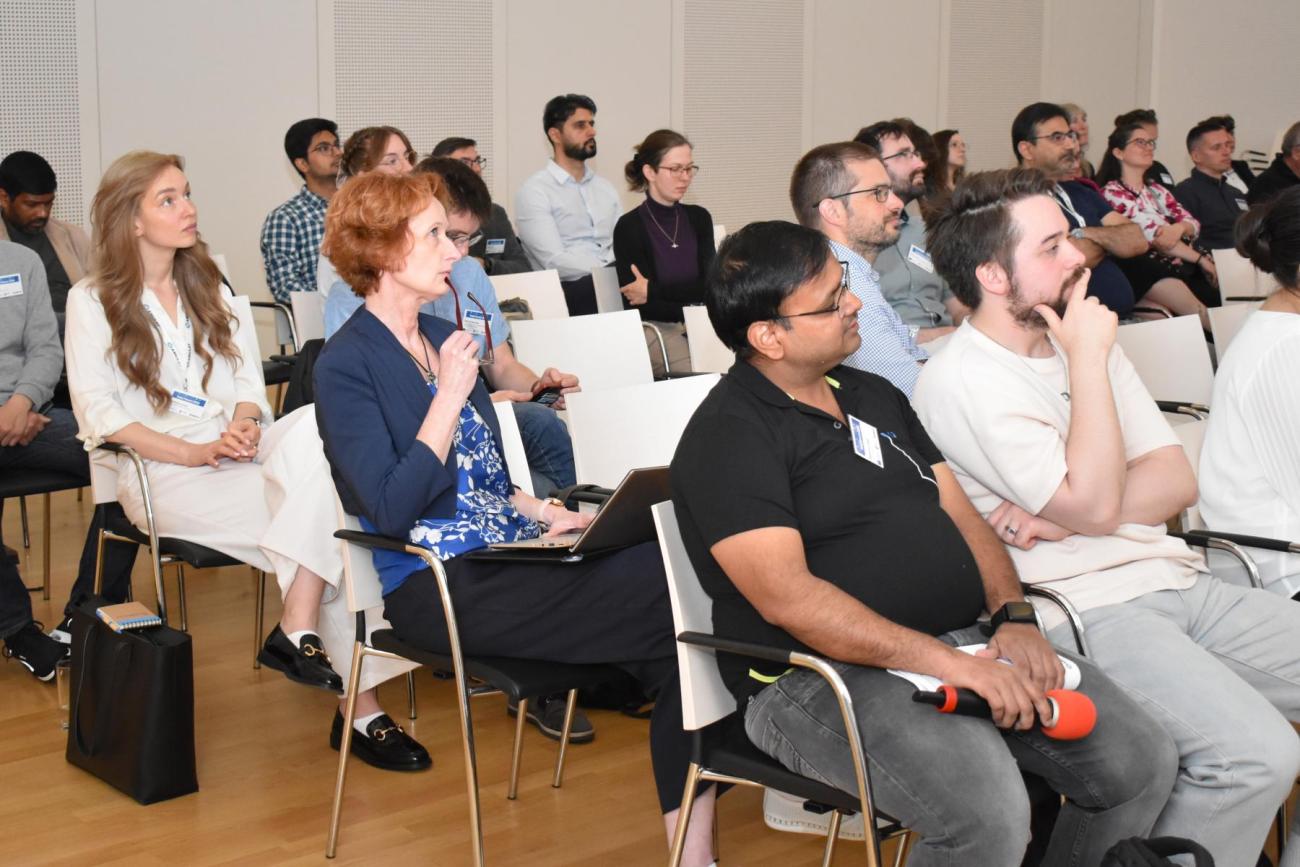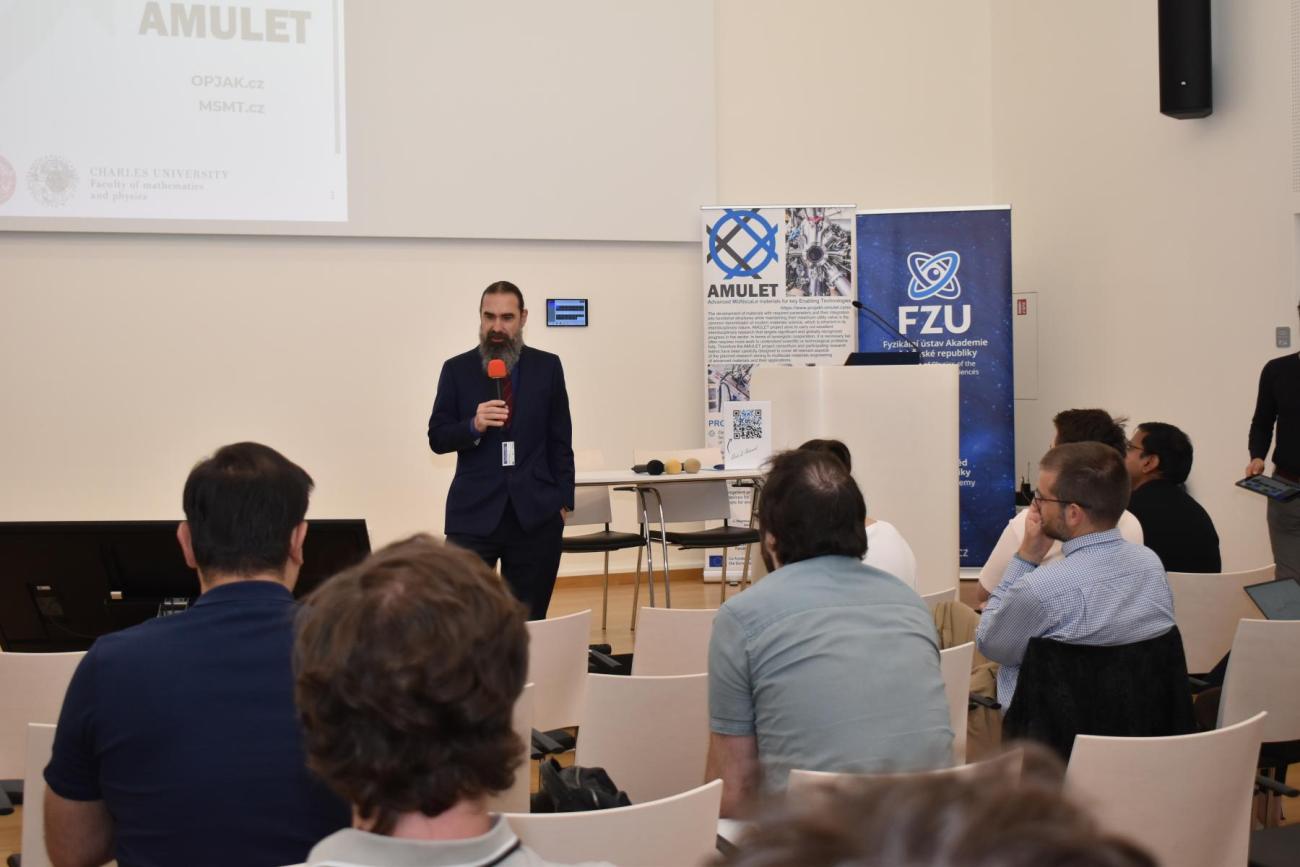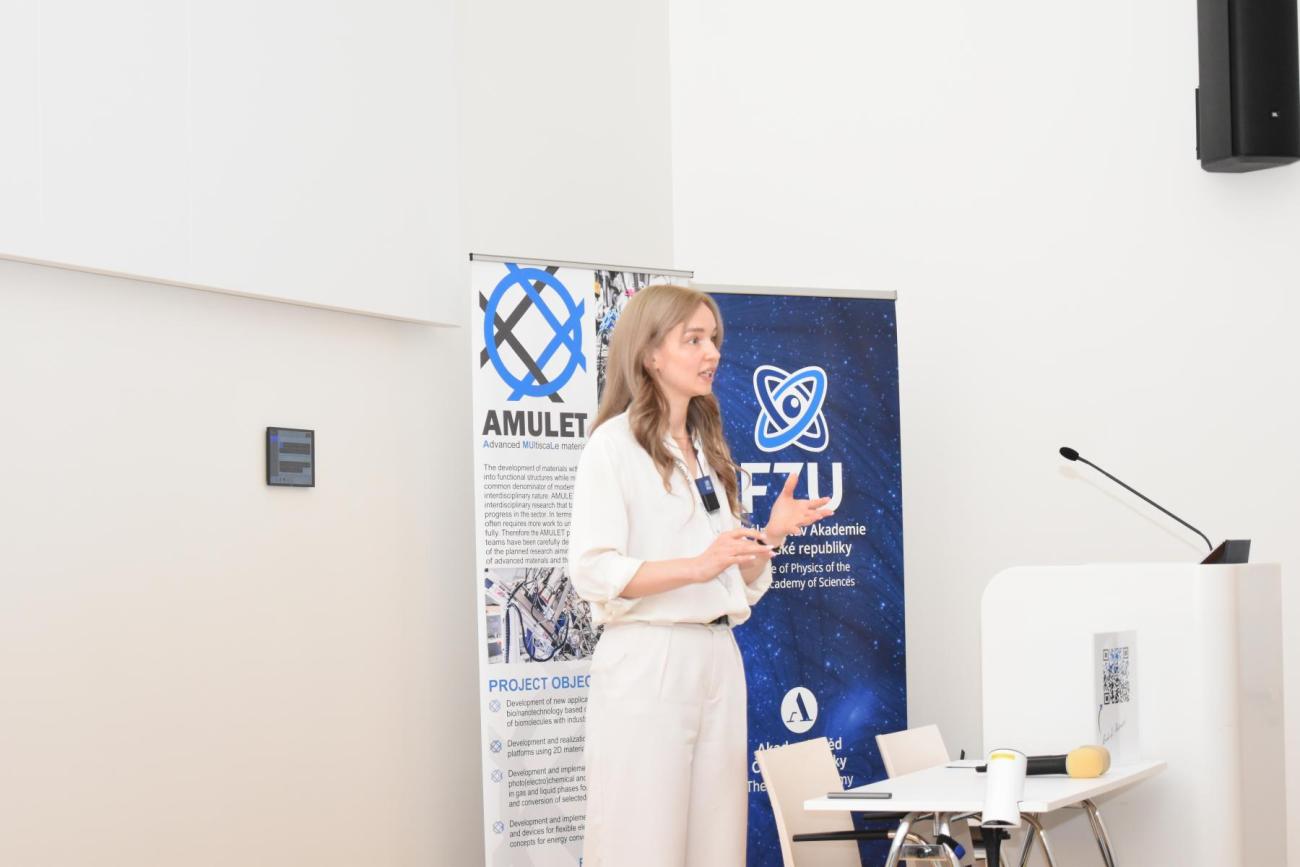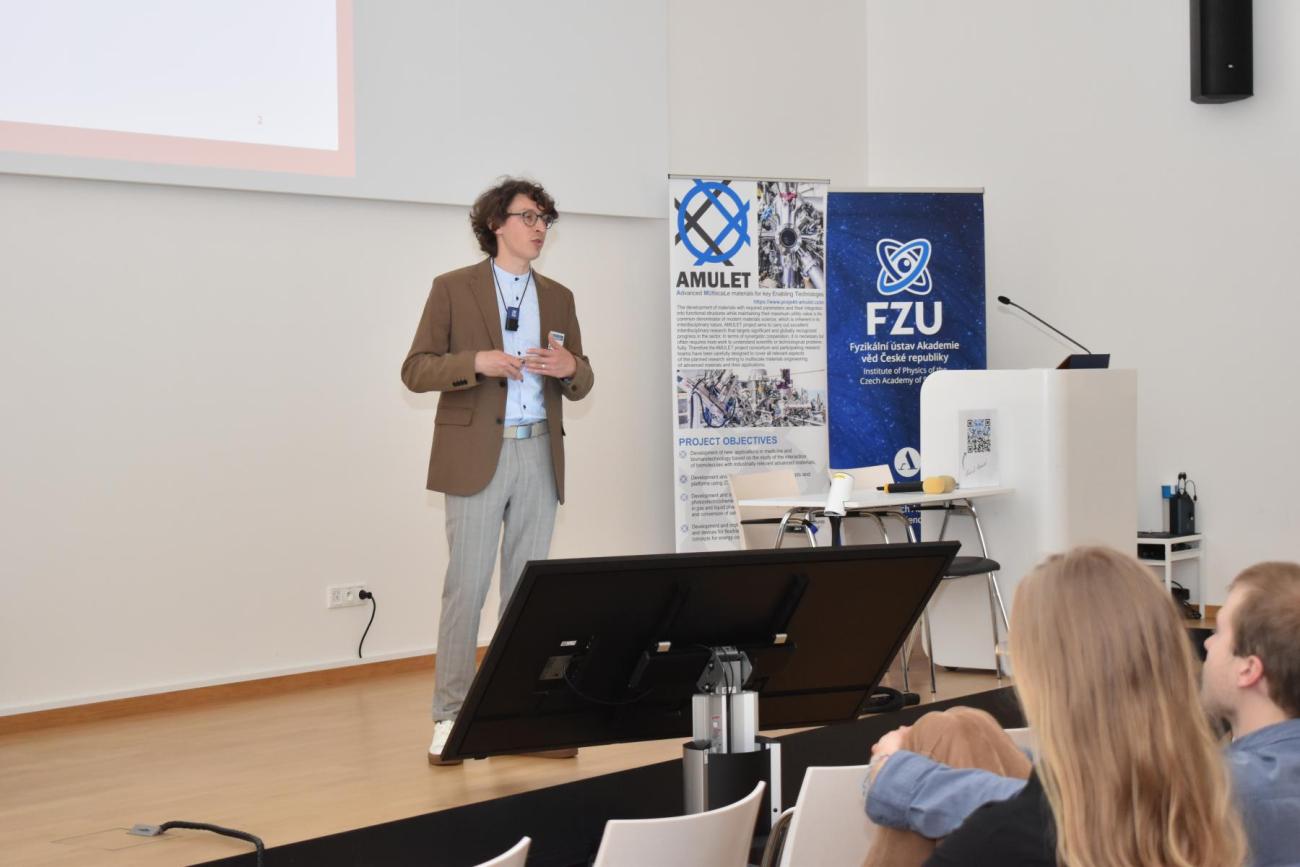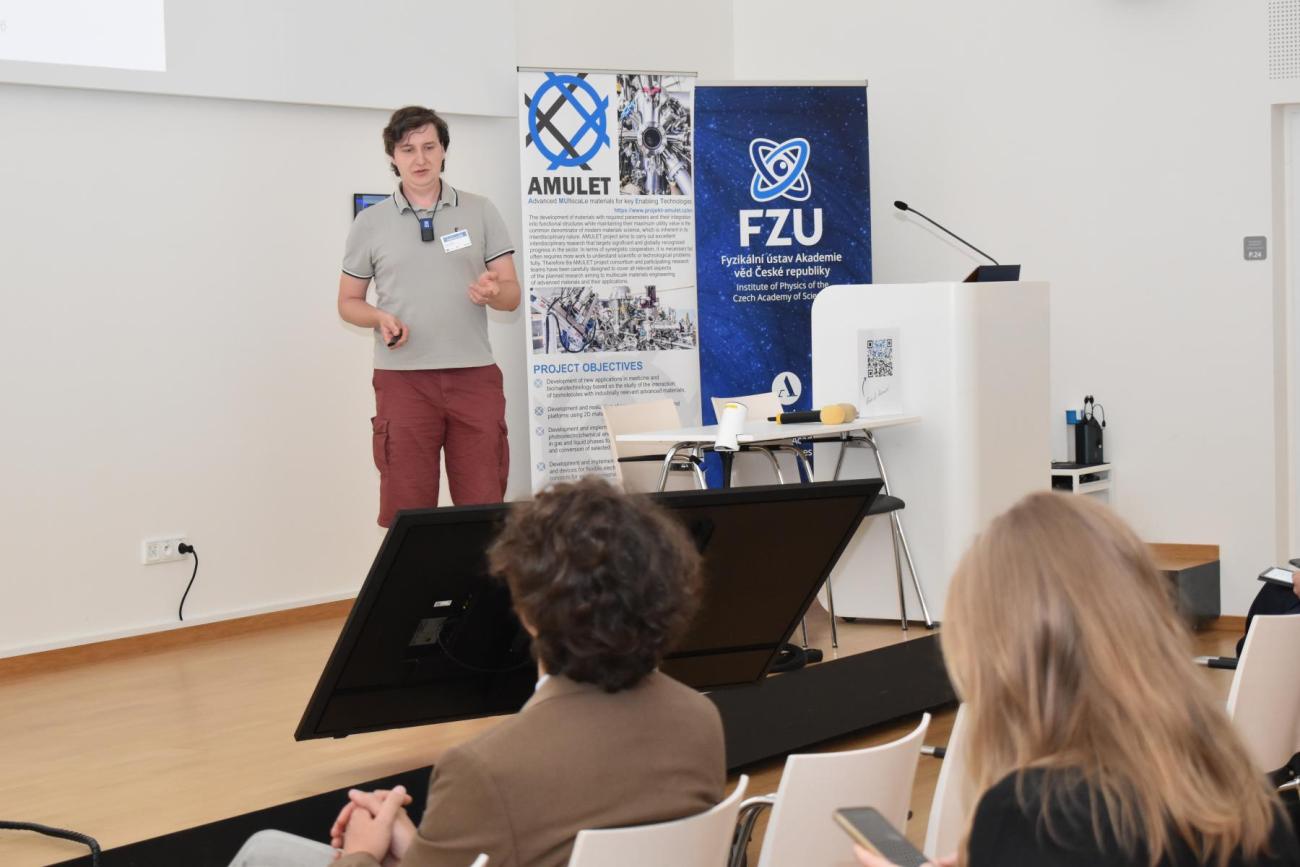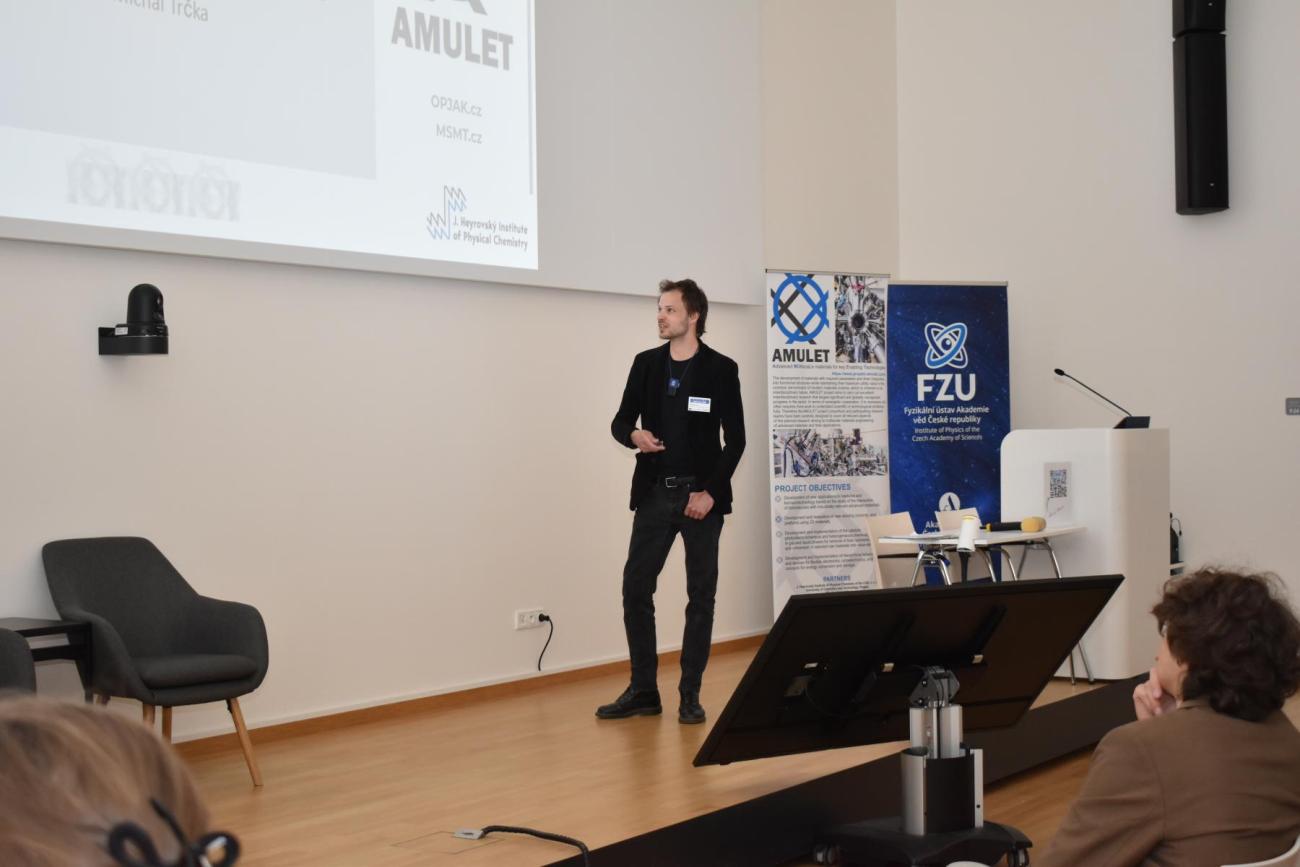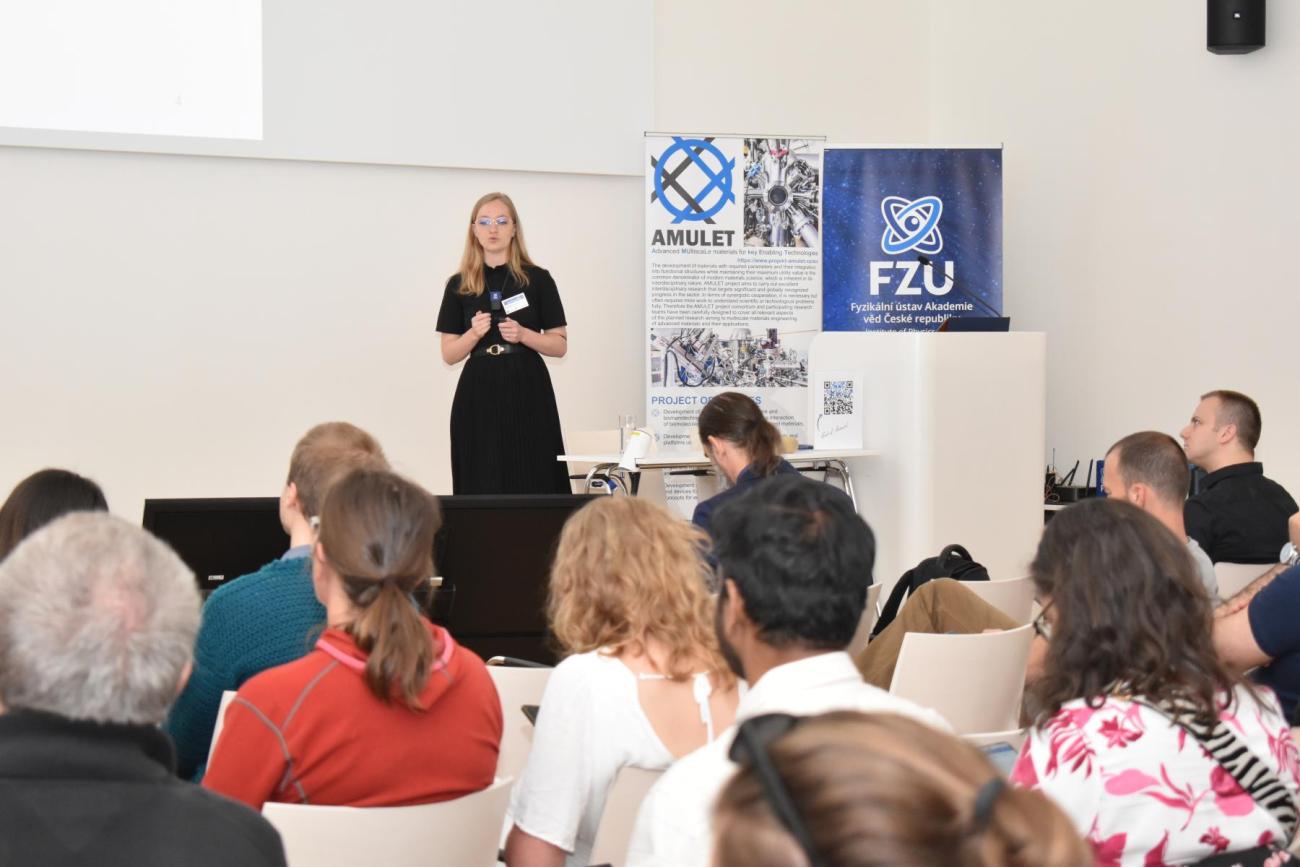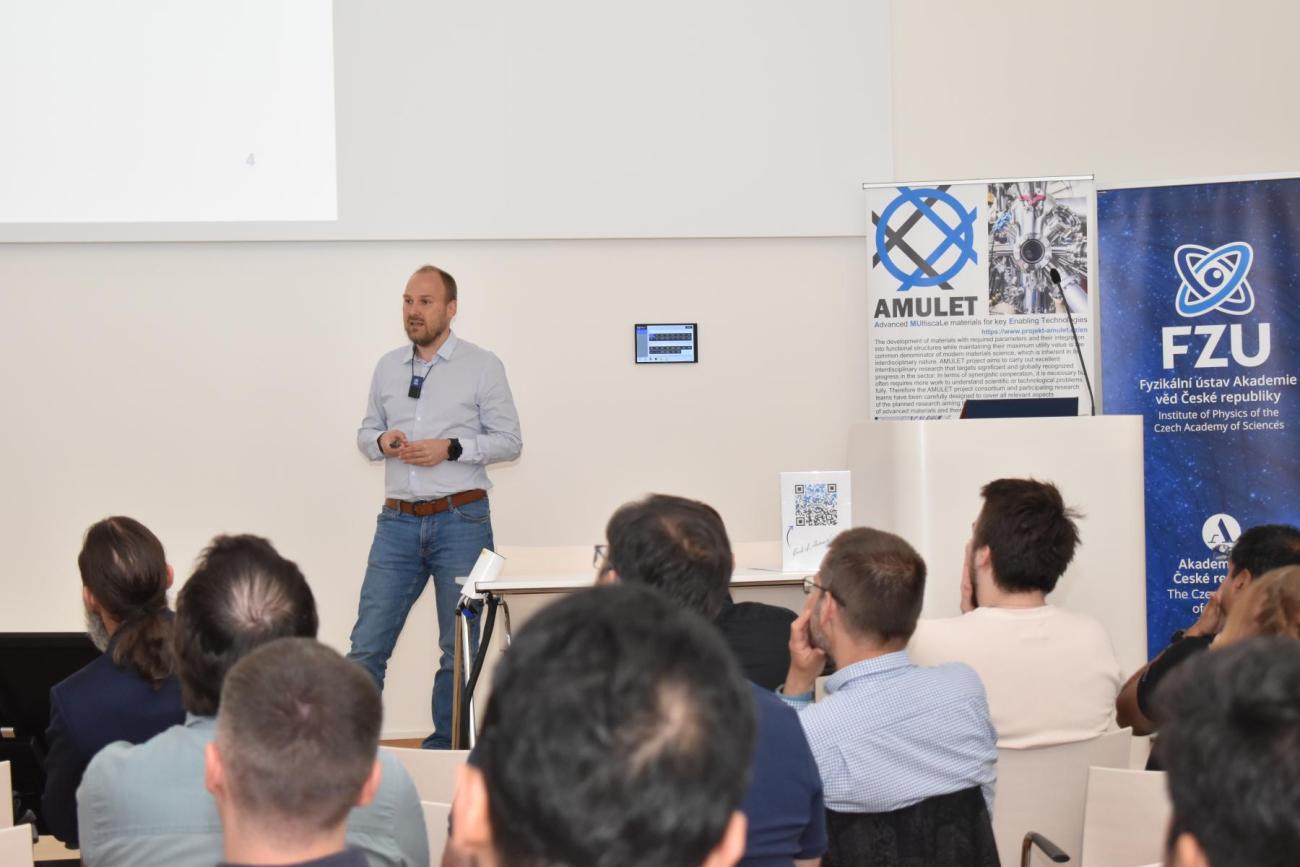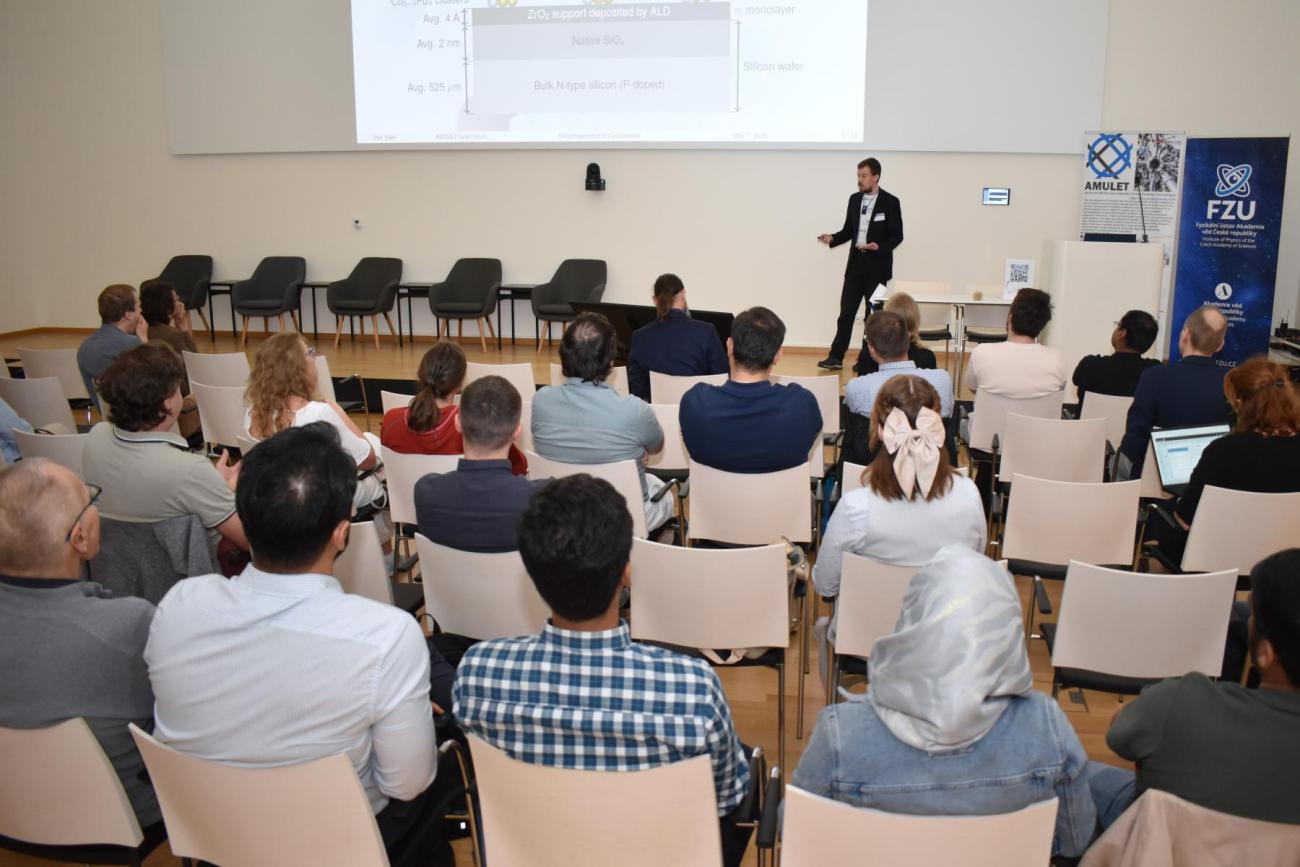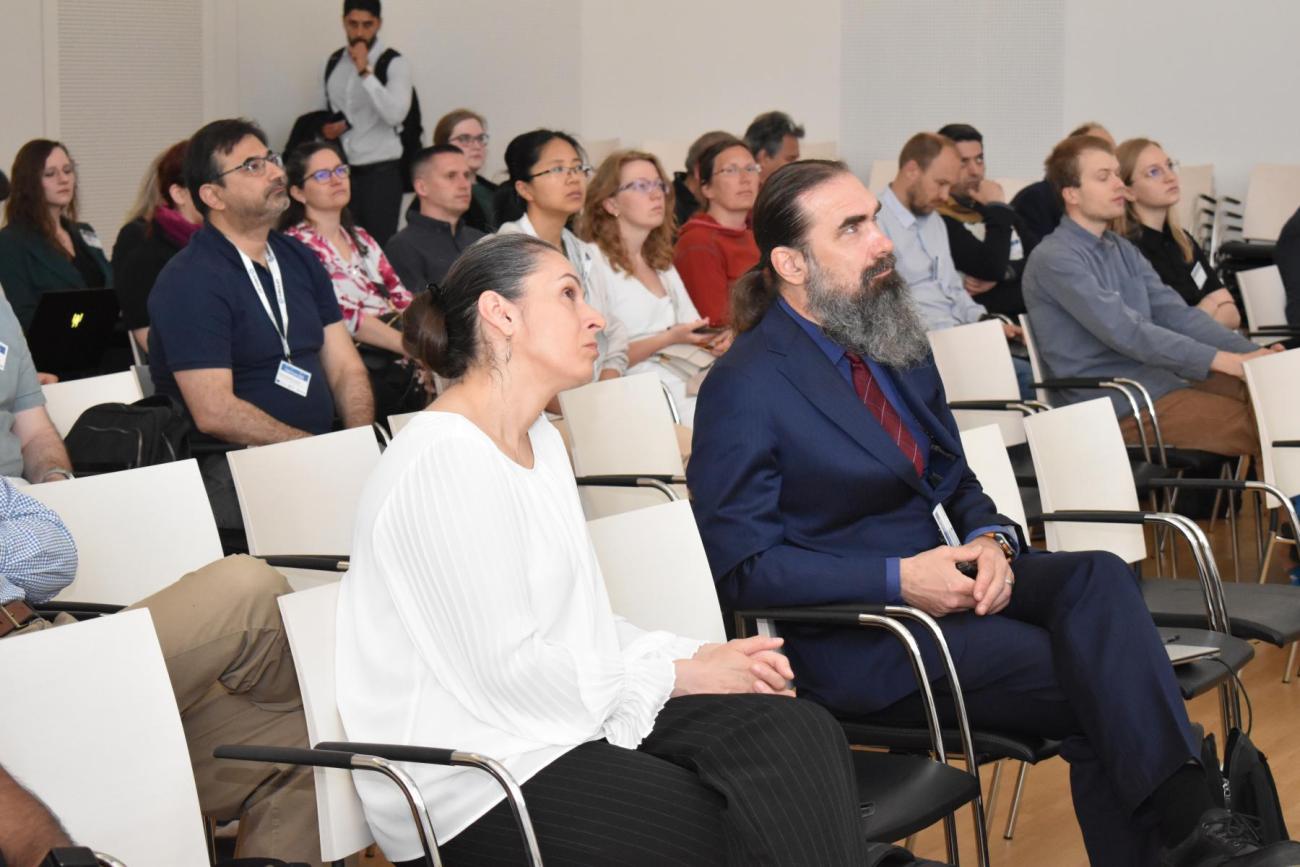


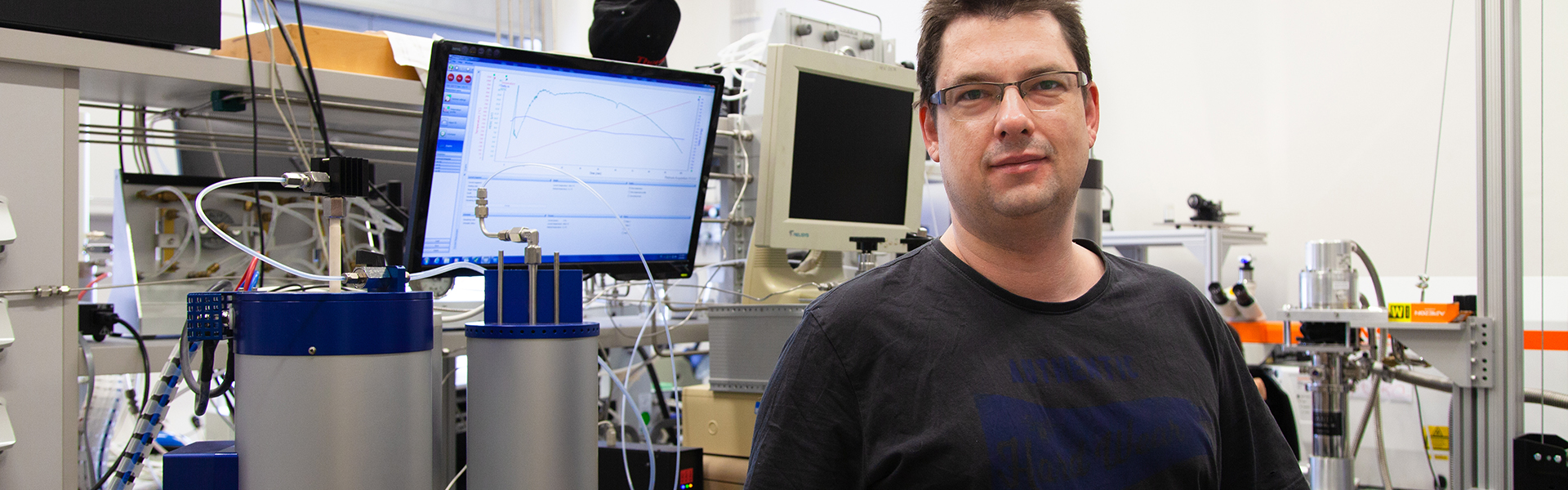
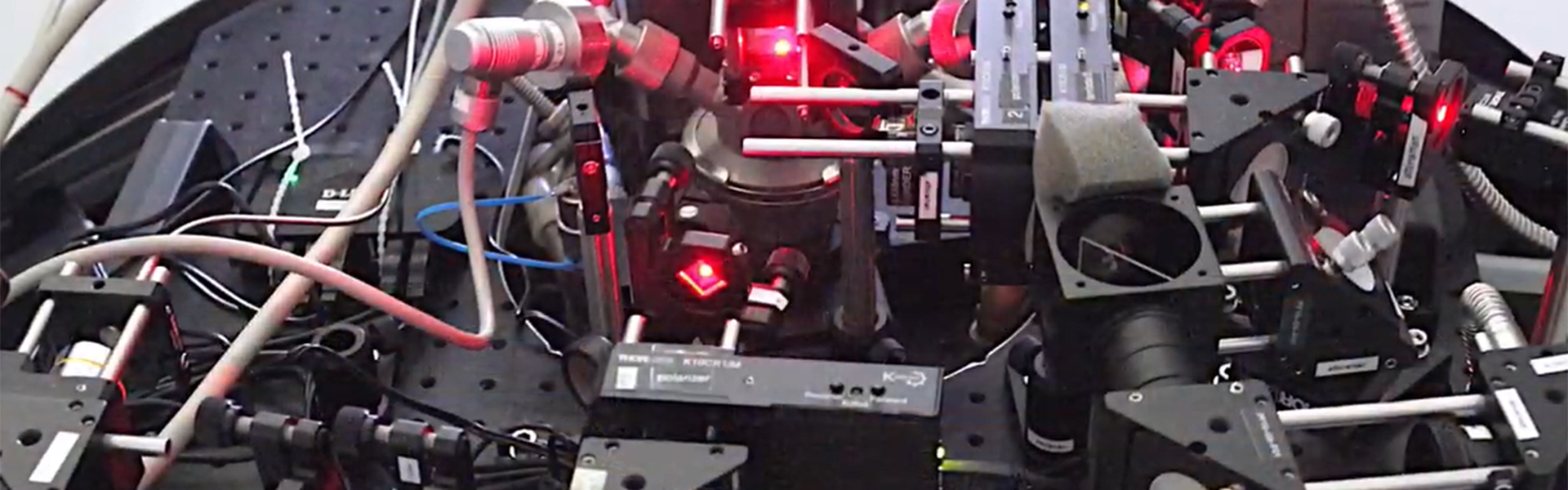
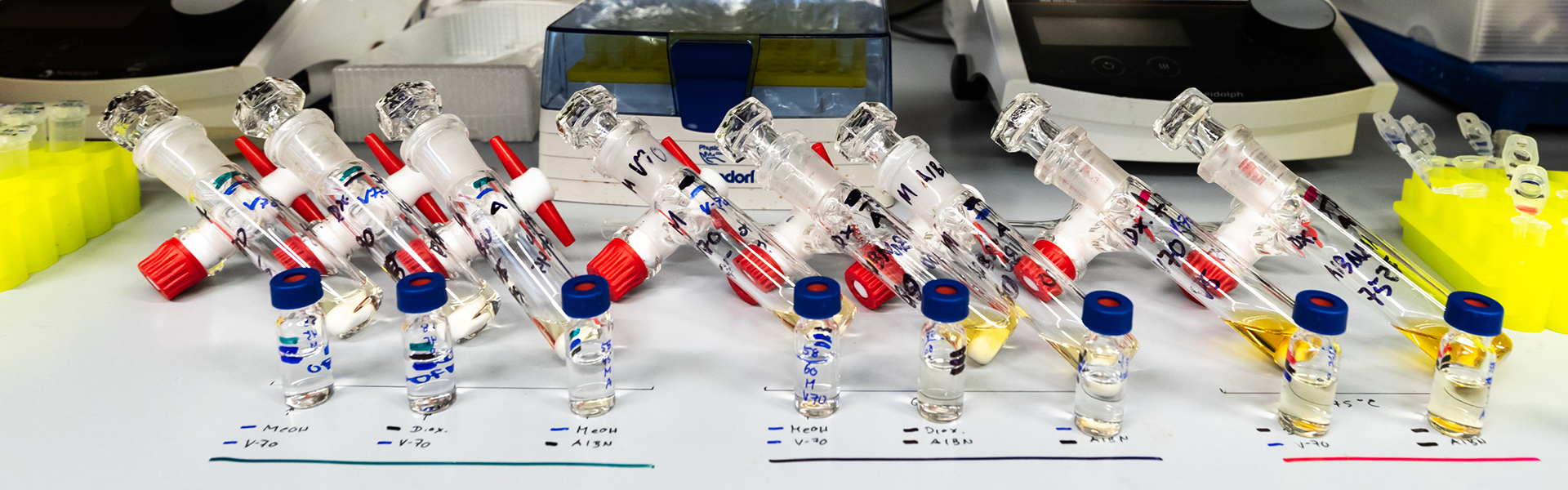

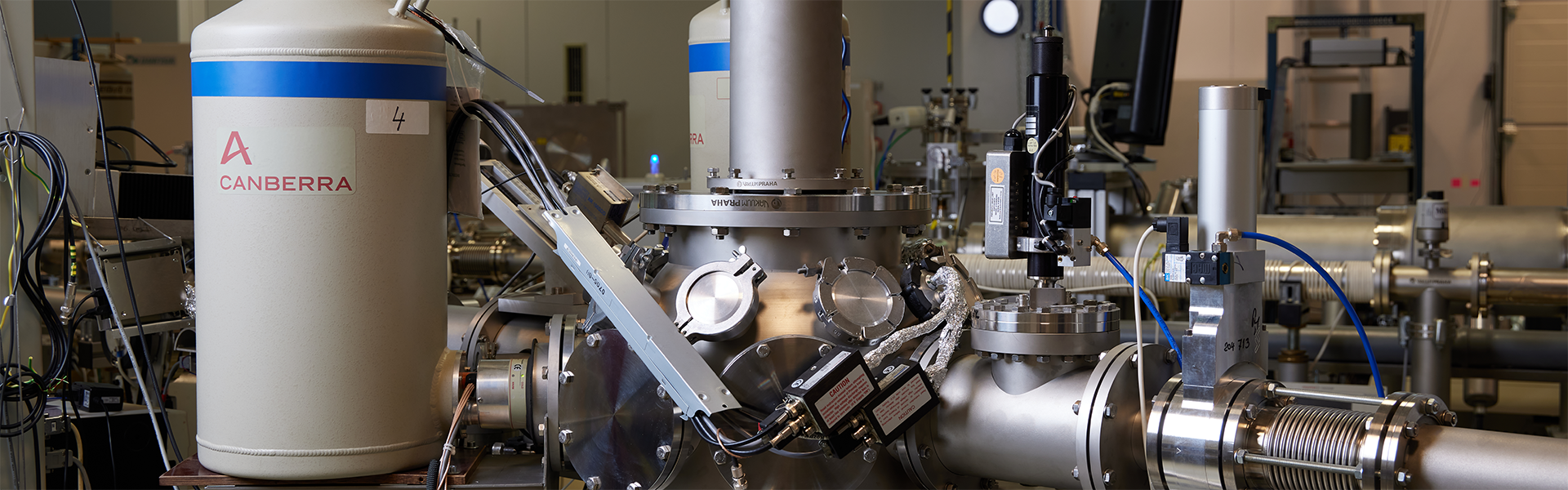
On May 7, 2026, the one-day student conference Task Forum 2026, organized by the AMULET project, took place at the Institute of Physics of the Czech Academy of Sciences. The event brought together around 50 participants from various fields including materials research, physics, chemistry, biomedicine, and nanotechnology. The conference primarily provided space for PhD students and postdoctoral researchers to present their current research projects and discuss them with colleagues across disciplines.
The AMULET project focuses on advanced engineering of multiscale materials — from designing structures at the sub-nanometer level to integrating them into functional devices for applications in electronics, medicine, and environmental technologies. The research combines state-of-the-art experimental and theoretical approaches and also addresses the societal and economic impacts of emerging technologies. Interdisciplinary collaboration and knowledge sharing are among the project’s core principles, which were clearly reflected in the conference programme.
Students Presented Results Across All Work Packages
Students from all five research areas of the AMULET project presented their work — ranging from the development of multiscale materials and biointerfacing to chemical and biological sensors, catalysis, and new electronic and optoelectronic devices. The programme included topics such as biosensors, photocatalysis, subnanometer catalysis, hybrid antimicrobial platforms, bioimaging, and resilient nanoelectronics. Thanks to the broad thematic scope, discussions often led to unexpected connections and new ideas.
Space for New Collaborations
The conference was also attended by senior scientists who supervise student projects within AMULET and share their experience from international research with the younger generation. Among them were Martin Kalbáč, Jana Kalbáčová Vejpravová, Anna Macková, Zdeňka Kolská, Hana Tarábková, Otakar Frank, and others. Their presence highlighted the importance of intergenerational collaboration in science, where experience meets the fresh ideas and energy of early-career researchers.
The conference also emphasized the crucial role of supporting young scientists in contemporary research. PhD students and early-career researchers are often those bringing new perspectives, the courage to experiment, and the ability to connect disciplines that previously had little interaction. Events like this provide them not only with an opportunity to present their own results, but also to gain experience in scientific discussion, establish international contacts, and explore future collaborations.
The conference programme and the full list of presentations are available here.